More Thoughts After Bookends

The Wednesday Wars by Gary D. Schmidt

Light, amusing, well-written glance into America in the 1960s. The Wednesday Wars is about the mishaps and misfortunes of a young teenager who loves Shakespeare and goes to high school in Long Island, New York. The author ushers the reader into the story so well, that eventually, I couldn’t wait for the book to be over because I didn’t feel like going to middle school any longer. 😀 The wording gets repetitive after a while, which was a little tiring. Also, his parents’ lack of involvement makes me sad.
Even though I’m not a middle-grader, I might check out the author’s other books.

A Hobbit, A Wardrobe, and a Great War: How J.R.R. Tolkien and C.S. Lewis Rediscovered Faith, Friendship, and Heroism in the Cataclysm of 1914-18 by Joseph Loconte

Continue reading “More Thoughts After Bookends”

Thoughts after Bookends

Gilead by Marilynn Robinson

I heard big things about this author (Gilead won a Pulitzer), but the story just didn’t captivate me. It’s a memoir — a pastor writing letters to his son on his death bead, but he’s not actually bedridden. His son is still young at the time of his writing, and I wanted them to be out making memories together, rather than him just reminiscing days gone-by. I found it hard to follow the plot line, since there was little action. There were some thought-provoking faith statements here and there, and maybe someone else would really enjoy. Am I missing something? Because it sure wouldn’t be the first time I’ve missed something poignant in my first read through.

True Grit by Charles Portis

I’m not typically one for Westerns (wait, had I ever read one?), but True Grit is now a personal classic — both witty and brilliant. The main character, a 14-year-old girl, seeks vengeance on an outlaw responsible for her father’s death. Despite all the big shots, SHE is the one with the true grit. My husband and I listened together, and he wrote some fun thoughts on the book.


The narrator I found on Scribd (Donna Tartt) makes the experience, along with driving across the high desert plains and canyons as you listen (seriously, just start wandering around barren backcountry for the full western effect). The 2010 movie follows the book quite cleverly!

Anne Frank Remembered by Miep Gies

After reading Anne’s Frank diary, this book deepens the layers of the harrowing account of hidden Jews in Amsterdam. Miep and her husband made it possible for the Frank family to go into hiding. Her bravery shines through even though she forcibly shifts the spotlight off of herself in this detailed account. She said she just did what had to be done — even when it meant standing toe-to-toe with the Nazis. I recommend this book if you’re interested in true, home-front WWII courage.

How to Thrive as a Pastor’s Wife by Christine Hoover

Encouraging, convicting, and a blessing to read. Christine warns against comparison and bitterness, and highlights safeguards and boundaries for your marriage and children amidst ministry.

Millie Keith based on the series by Martha Finley

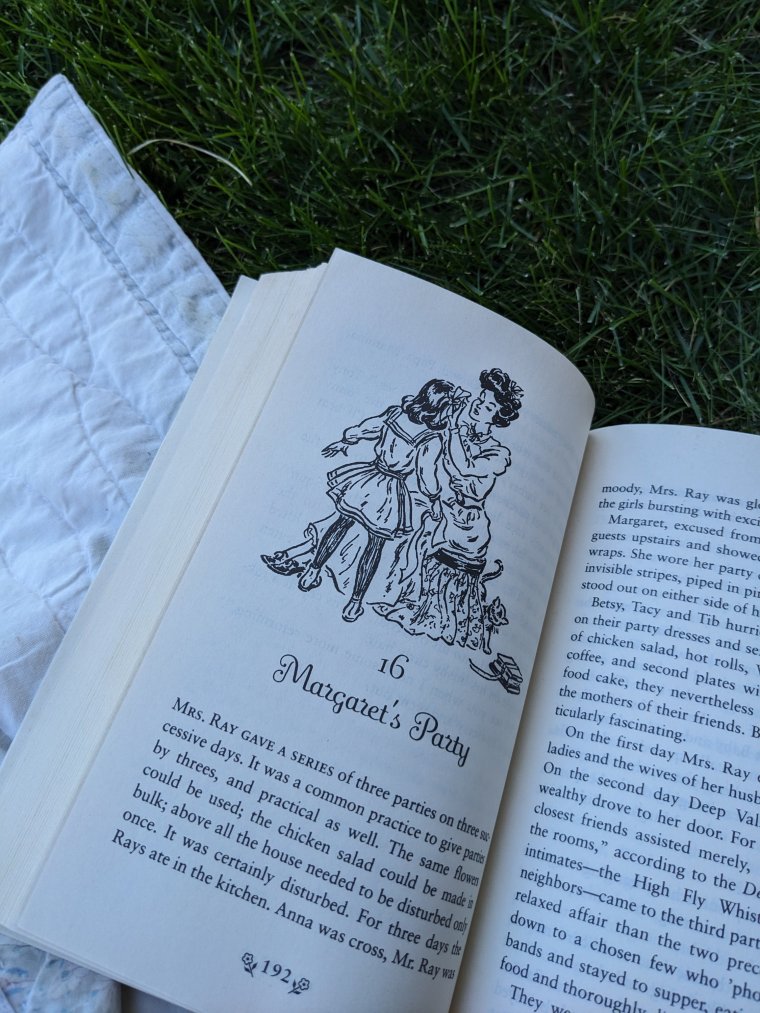
This purple-covered, eight-book series is really for teen girls, but reading them is like coming home to me. Something I cherished this summer. I wrote a post dedicated to the characters, The Company We Keep and also interviewed the adapter/author here.

This Tender Land by Kent Krueger

This Tender Land was a page-turner for me, and I enjoyed the quality description and the history nestled in the 1930s setting.

This story about kids, is certainly not FOR kids. The children meet a constant string of unsavory adults. This makes the storyline a bit depressing, though, unfortunately, realistic.

*SPOILERS — This Tender Land doesn’t detail anything explicit, but alludes to all manner of everything sinful. I found it sad that the orphans were, in a way, pursuing the one true God, but never found Him — never once did they find the Word of God. Lots of spiritual references and a theme of forgiveness, but no solid theology landed upon. All the “spiritual” adults in the story were plagued with phoniness and hypocrisy (like faked healings).

Death on the Nile by Agatha Christie

Only my second novel by her, I’d love to read some more. We found the overwhelming amount of characters to be tedious and difficult to keep track of, as trekked along our cross-country roadtrip. I googled the lengthy list of characters. However, her writing is so vivid; it’s amazing how each character truly owns their own backstory and voice.

The Watchmaker’s Daughter by Larry Loftis

A biography about Corrie ten Boom, told in chronological order. If you’ve never read The Hiding Place, there’s no match for it, and I highly recommend reading it before any other biographies about the Ten Booms. You just can’t replace the soul-stirring, first-person, unfolding drama of The Hiding Place. However, The Watchmaker’s Daughter tells their story well, and includes some information and historical context that The Hiding Place does not.

Honey for a Child’s Heart by Gladys Hunt

I loved this book! It’s about the importance of children’s literature, laced with reasons and references from great fiction. It’s delightful and compelling. Her nods to Winnie the Pooh, Little House on the Prairie, etc. is like a little visit to the wonderment of childhood and provided fresh and practical inspiration for making my own son’s childhood sweet with honey. “Pleasant words are a honeycomb, Sweet to the soul and healing to the bones.” Proverbs 16:24

She includes lengthy recommended booklists in the back.

Transforming Power of the Gospel by Jerry Bridges

Transforming Power of the Gospel changed my life years ago when my dad gave me a copy, in response to a lot of wrestling with questions.

How do I be sanctified? God is sovereign, so how do I depend on Him but also walk forward in responsibility with the right motives? And why is not working? Why do I do the thing that I hate?

If you have questions like this, know the gospel is for every day. Jerry Bridges discusses the MOTIVATION for our day-to-day good works. Guilt that meets GRACE that outpours into gratitude. He beautifully illustrates this from the life of Isaiah.

MORE TOMORROW

Thank you for reading by book reviews. I always enjoy and welcome your recommendations and discussion on any of the ones you’ve also read! Isn’t it interesting how our perspective of a book can be shaped as we exchange ideas and takeaways with others?

Check back on the blog TOMORROW, because I have more recent book reviews, including Jill Duggar’s new book, and some of my favorites of all time!

The Company You Keep

I met her many years ago, when I was 13.

Her name is Millie Keith, and she remained a great friend to me through all my life’s seasons. She also was 13, the oldest of eight children, and a fairly new Christian, desiring to follow Jesus’s footsteps. The biggest difference between us is that she lived in the early 1800s. She wasn’t even real at all.

The Millie Keith series captured me with humor and dynamic characters and plot, and showed me how wrestling with doubts as you learn to trust God is normal. Millie moved to the frontier from Ohio, leaving everything familiar. The Keith family shares the gospel with whoever they can, on steamboat or stagecoach. Later, due to a chronic sickness, Millie would visit the deep South to try to heal her lungs. While there, she stood up against slavery and . . . lost her heart. Finally, in her 20s, she would answer the call to a foreign nation to share Christ with a place far different than anything in America.

Many Christian fiction books mention “God,” “faith,” and “prayer” a few times and that’s it. That’s fine. Not all art must spell out truth, some just reflects it. Christians have also written stunning analogies (like Pilgrim’s Progress and the Narnia books). They’re desperately needed. But as a young person, I was most encouraged when reading about believers who apply God’s Word to their every day scenarios, like loving a little brother when he is annoying or giving grace for a legalistic religious friend. Millie prays in an ongoing conversation to God throughout her day, lifting up her worries and praise at His goodness. While the Keith family’s lives are bright, humorous, and full of good things — they also encounter difficult questions, suffering, and the hardships of the frontier. Fiction is good, because it reminds us “both what the world is, and what it should be” (said by a fellow writer friend).

Millie’s Aunt Wealthy, an eccentric mentor character, says, “Life is not a tea-party my dear, but a wild adventure.” She inspires us to search for “divine appointments,” opportunities God brings to minister to a variety of different people who cross our paths.

I wanted to be like Millie. I wanted a Bible with hot chocolate stains on it.

“(Millie) had been in the habit of reading her Bible at least once a day since she had become a Christian two years before. Papa had knelt with her when she prayed to accept Jesus as her Lord, and then he had given her his own Bible… Millie had carried the book with her not only to church and to school but up trees and under hedges — all of her favorite reading places.”

Millie’s Unsettled Season

“The pages had been stained with tears, shaken with laughter, and endured at least one cup of hot chocolate spilt in the book of Lamentations, but Millie’s fingers knew each and every book, and many verses, by feel.”

Millie’s Remarkable Journey

Keep Good Company

Have you been influenced by fictional people? Paxton Hood said, “Be as careful of the books you read, as of the company you keep; for your habits and character will be as much influenced by the former as the latter.”

In my experience, not all “Christian” fiction is wholesome. And not all wholesome fiction is “Christian.” So be watchful in your reading, and consume only the best. “Be wise to what is good, and innocent as to what is evil” (Romans 16:19).

I love to spur others to read all things excellent and pure! “One must always be careful of books and what is inside them, for words have the power to change us.” –Cassandra Clare

Christians certainly could only read the Bible, biographies and commentaries . . . but oh what they would miss in the world of fiction.

There are dozens of reasons to read quality fiction, and many have said it better than I can. I believe it gives us a beautiful gift of common grace — creativity and imagination realized. It teaches us to think outside ourselves. Ann Voskamp wrote in an article about audiobooks, “When reading is  your favorite pastime – you enter into other lives and gain more time.”

Fiction helps shape us to see who we want to be and understand who we shouldn’t be. It provides a healthy way to pick apart a character (without the sin of gossip and unkind criticism).

Stories can give us aspects of the gospel in new lights and personify truth. The very elements of a story — plot twists, beginnings, happy endings, — mirror our Maker’s great redemption story for us. And the ending will be oh so good and happy.

Create the Company

Not only consume good fiction, but please create it! If you are nurturing the draft of story, don’t give up on it. Etch all the excellence you can muster into the paragraphs. We need more God-honoring word-art in our world.

“Stories are verbal acts of hospitality.”

Eugene H. Peterson

Be like Kersten Hamilton, and pour your soul into your craft. She was tasked with adapting Martha Finely’s work into the Millie Keith series I talk about so much. She bravely enhanced the plot and characters, added much biblical truth, and brought history to life. These books are out of print unfortunately, so they may cost a bit more (they’re worth it, though). You can read my interview with Kersten here where she shares about the fascinating process of adapting this series. Her word arrangements sing, so I value her advice to young writers.

C.S. Lewis said, “Since it is so likely that (children) will meet cruel enemies, let them at least have heard of brave knights and heroic courage. Otherwise you are making their destiny not brighter but darker.”

Let’s aim to keep (and create) fictional company that will inspire brighter destinies and wild adventures — all for Christ’s glory.

What’s On Your Mind?

Are you ever just overwhelmed with concerns? Maybe you can’t sleep as your thoughts rattle around like the mop head in the dryer. Should I buy that supplement? How can I help that person who’s struggling? What will I make for dinner if those mushrooms went bad? Did I ever cancel that subscription? Oh, I forgot to research how much water dahlias need! How did I come across in that conversation? Is that guy spraying poisonous bug spray in the street? *Cough*

Honestly, I wasn’t even sure where my prayer notebook was when my mom shared how she was re-committing to a journaling idea for the summer.

Since I was feeling a little overwhelmed, I decided to join her.

It hasn’t been long, but this daily practice already helped shake me out of spiritual drowsiness and increased my desire for intimacy with God. I look forward to this time each day! I’ve found myself opening my Bible more throughout the day, when before I would have reached for my phone.

God invites us to, “Pour out your heart before Him” (Psalm 62:8).

Six Things

First, open your journal and write down three things you’re thankful to God for. This causes me to reflect and acknowledge the worth of the King. It’s worshipful. What gifts of grace did He shower on me? Often, my “three things” are prompted by a Scripture text I just read and hope to keep dwelling on.

Maybe, if it’s at the end of the day, you can write three ways you saw God’s goodness bestowed anew. As it becomes a habit, you’ll search and expect to see God’s character displayed in your ordinary routine.

“O children of God, seek after a vital experience of the Lord’s lovingkindness, and when you have it, speak positively of it; sing gratefully; shout triumphantly.”
— Charles Spurgeon

The second part of the journaling challenge is simply to write down three things that are on your mind. What’s troubling you? What’s keep you from sleeping, or causing you to fret? Talk to God about them.

“Are you weary, are you heavyhearted?
Tell it to Jesus,
Tell it to Jesus;
Are you grieving over joys departed?
Tell it to Jesus alone.” –Jeremiah Eames Rankin

The Lord has listened patiently over the last few weeks to all that’s been on my mind. All of it. He doesn’t mind when it gets repetitive, as one heartcry keeps surfacing to the top. He’s there for the prayers about supplements, about financial decisions, about the dinners. He is intimately acquainted with all our ways, and works in all the details of our days — big or small.

“Casting all your anxiety on Him, because He cares for you.” –I Peter 5:7

Writing six little prayers like this (or any other format) will help us “seek God earnestly” in a dry and weary land where there isn’t any water! My soul is satisfied when I cast all the cares and complaints on Him. Then I can truly just rest in Him and enjoy giving Him praise.

Little Women Quote Quiz

I love this picture of all the copies of Little Women! It represents friends who gathered together to discuss and laugh about the contents of great literature.

“The year is gone we still unite,

To joke and laugh and read,

And tread the path of literature,

That doth to glory lead.”

–Louisa May Alcott


Can You Guess Which Character Said It?

  1. “I know what I mean, and you needn’t be statirical about it. It’s proper to use good words, and improve your vocabilary.”
  1. “In spite of their demonstrative manners, American girls are very nice when one knows them.”
  1. “What has that boy been about? Don’t try to shield him. I know he has been in mischief by the way he acted when he came home.”
  1. “”Then we’ll go and eat up all the raisins.”
  1. “You can go through the world with your elbows out and your nose in the air, and call it independence, if you like. That’s not my way.”
  1. “Money is a good and useful thing, Jo, and I hope (you) will never feel the need of it too bitterly nor be tempted by too much.” 
  1. “She’s got such a soft heart, it will melt like butter in the sun if anyone looks sentimentally at her.” 
  1. “Highty-tighty! Is that the way you take my advice, miss?”
  1. “No, don’t lounge, it makes me nervous.”
  1. “I want a great many crumples of this sort put into it today.”
  1. “This unassuming style promotes study, that’s why we adopt it.” 
  1. “Rather a rough road for you to travel, my little pilgrims, especially the latter part of it. But you have got on bravely, and I think the burdens are in a fair way to tumble off very soon.” 
  1.  “To my friend and neighbor Theodore Laurence, I bequeathe…my clay model of a horse though he did say it didn’t have any neck.”
  1. “So the poor night is to be left sticking in the hedge, is he?”
  1. “There was no one to bring the horse to the saddle, so she took the saddle to the horse.” 
  1. “Tell me please! I like to know all about the – the boys.” 
  1. “What’s the use of looking nice, when no one sees me, but those cross midgets?”
  1. “I don’t believe fine young ladies enjoy themselves a bit more than we do, in spite of our burned hair, old gowns, one glove apiece, and tight slippers that sprain our ankles when we are silly enough to wear them.”

Answers:

  1. Amy 2. Kate Vaughn 3. Mr. Laurence 4. Demi 5. Amy 6. Marmee 7. Jo 8. Aunt March 9. Amy 10. Meg 11. Laurie (speaking about his haircut) 12. Mr. March 13. Amy 14. Mr. Brook 15. Jo 16. Jo 17. Meg 18. Jo

Little Women DISCUSSION QUESTIONS

— What’s a favorite quote/scene from the book?

–What are threads/themes throughout the book? (I. e. Pilgrim’s Progress, the discussion of money)

–How do you relate to the characters?

–How do the characters change through the course of the book?

–Do you agree that Laurie and Jo weren’t right for each other?

–What is the underlying worldview? What are the Marches’ religious views? What is the perspective of their current events/young America?

–Any facts about Louisa May Alcott you want to share?