Blog

For Whom Did You Carry the Rock?

“For whom did you carry the rock?”

It’s a strange question, I admit, but it’s one I’ve been asking myself nearly every day since I read Betty’s biography.*

The question, and all its versions, (“but why did you carry that stone in the first place, Abi?”) has followed each time I’ve felt a twinge of entitlement or bitterness or like anyone owes me anything.

Why does this rock question carry meaning?

A young woman named Betty felt called to the mission field. She poured every ounce of her life’s passion into an isolated group, the Colorado Indians in Ecuador. The harvest was plentiful, but she stood in the gap as one of the few laborers studying the culture and the languages (actually, two of them).

After a long nine months of harvesting meticulous translation notes, she received word that all of her documents had been stolen along with her luggage. She never saw them again, and her observations would never birth a single resource, let alone a Bible translation.

Why would God waste the work of such a rarity — a talented Scripture translator willing to use her gifts for however long it took to reach an isolated people group? It was His gospel after all. Betty stared at the undressed truth that God’s sovereignty transcends what looks like efficiency to us. To her, it seemed like a storm without any rainbow, but God wove a fruitful plan for the woman who became Elisabeth Elliot. 

Due to this experience with the Colorado people and what many would assume a “wasted year” in the jungle, Elisabeth Elliot was impacted by an apocryphal story (so it’s not Scripture), and now it haunts me too. It reminds me nothing done in the service of God is truly wasted, even when we are left confused by the results of our efforts.

Here is the “lovely little African legend about Jesus,” that Elisabeth Elliot said, “hit her between the eyes.” Jesus and his disciples summited a mountain and along the journey he asked them each to pick up a stone. John chose a large one, Peter a small one.

When they got to the top of the mountain, Jesus turned both stones into bread. Peter, of course, regretted choosing a small rock. Later, again Jesus asked Peter and John to pick up stones. This time, Peter found the largest stone he could muster. At the end of their day’s journey, Jesus brought his disciples to the edge of the water. There they were commanded to cast their stones into the water. Peter protested, thinking about the bread he’d hoped for, and his teacher answered, “For whom did you carry the rock?”

This story resonated with me because I carry various stones in ministry and my motives can fluctuate. Sometimes I choose the size of effort based on the give-and-take I think I’ll receive.

Why did I carry the rock? What if God never does anything with it? Or maybe He’ll turn it into bread I’ll never taste? Why did I mentor another believer? Why did I help with moving? Why did we share the gospel with our neighbor over and over and serve her until her dying breath, when she never seemed to turn to her Maker? Why am I in ministry at all? Did I carry that rock so I could have something for myself? Surely, God would reward His faithful servant. Why did we go on that rabbit trail of resources, training, and immersion in a culture? Is it a waste if God seemingly cuts the season short? If my marathon preparation never meets the race I expected?

God doesn’t work according to our measures of efficiency. Yet He never wastes. As soon as we recognize this, we’ll cease striving and spewing about what doesn’t feel logical or fair. Instead, our very purpose is “to the praise and glory of God’s grace,” and we rest all of our labor with the Chief Cornerstone who declares, “I will build my church” (Matt. 16:18).

We carry these rocks in obedience because He is good, because He can be trusted, and because He is worthy. Because God is good and big enough to hold something even as precious as the destiny of the Colorado Indians. He can hold even our unanswered questions.  

If we’re doing His work for something other than God’s glory, we should get out now. Those are only the motions, and He doesn’t want empty lip service when our hearts are far from Him (Is. 29:13).

It’s a joy to invest in friendships with those delightful, easy-to-love souls who share our sense of humor, and enjoy talking about the same things as us. We’re eager to pursue vibrant personalities who also love to give back. It’s comfortable and rewarding immediately.

Did we seek to make disciples for Christ, or was it for us? He will not give His glory to another (Is. 42:8). 

But purify our motives, Lord, and make us pure within. Let us seek to sacrifice out of hearts grateful for what You’ve already done for us, and for the eternal rewards you promise. Let us be willing to serve in ways which cost us, since you gave us Your costly love. Let us love the least of these, too. Cause us to hunger for the most magnificent, glorious purpose of magnifying YOUR name alone.  

“But now we do not yet see all things subjected to him . . . for it was fitting for Him, for whom are all things, and through whom are all things, in bringing many sons to glory, to perfect the author of their salvation through suffering.” Hebrews 2:8b, 10

Hebrews tells us we won’t see all things subjected to Him right now – we’ll have the rabbit trails and speed bumps. So let us introduce others to glory, not for the mere hope of an earthly satisfaction, but for the One whom “from Him, and through Him and to Him are all things. To Him be the glory forever” (Romans 11:35). Let His love be our reward even amidst aching loss, and let Him have the first place in our motives.  

And we can say in spite of stolen time and jungle sweat, like Elisabeth Elliot did,  “Of one thing I am perfectly sure: God’s story never ends with ‘ashes.’”

For whom are you carrying your rocks for? 

*“Becoming Elisabeth Elliot” by Ellen Vaughn 

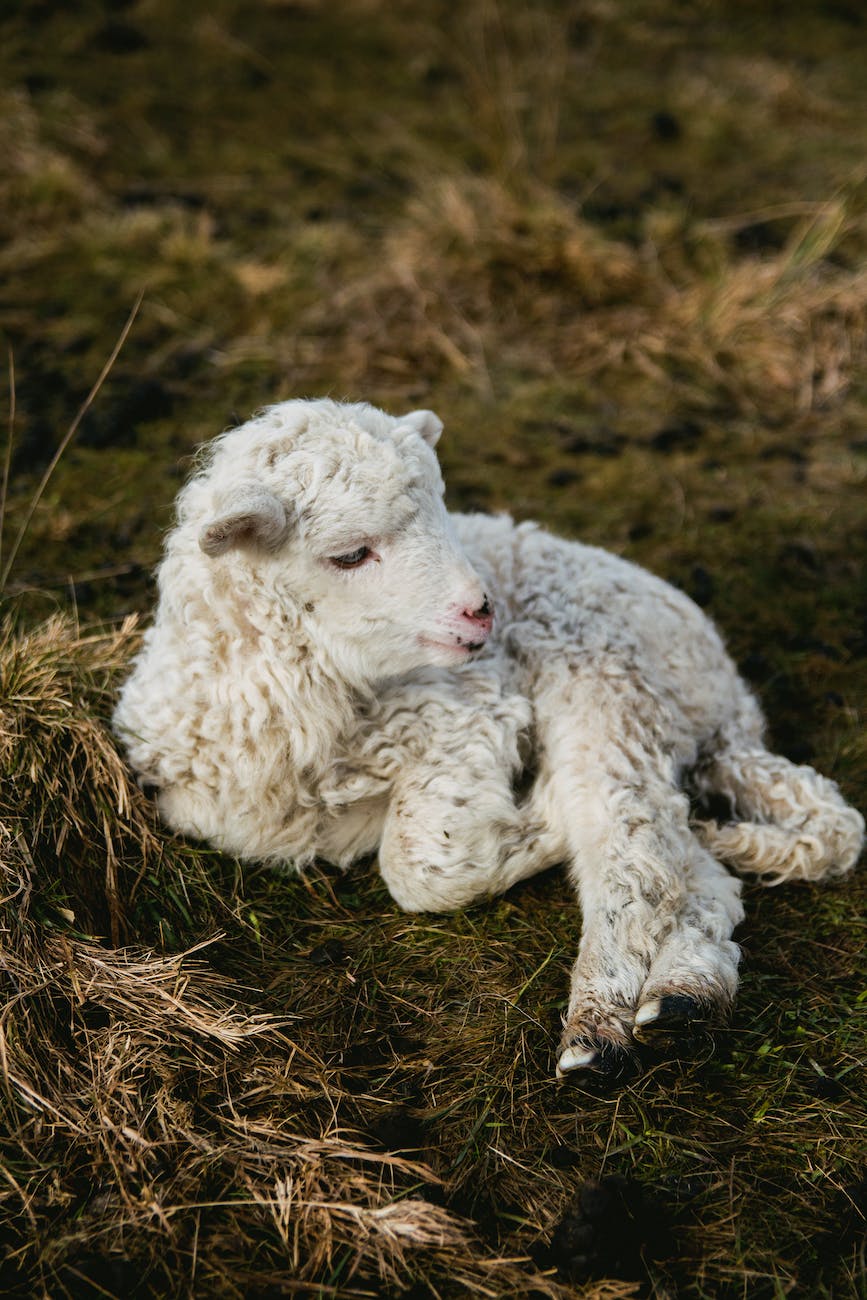
Do you believe your pasture’s green?

Perhaps you, like me, have found comfort in keeping a record of wrongs of your surroundings. Instead of resting, we’re fretting. I’ve been swift to find fault with a circumstance and resort to envy or strife in viewing my personal situation. Preoccupied with “what ifs” and “if onlys,” we wonder if we’re in the right place at the right time, or maybe we’re hopelessly lost and in the wrong lane at peak rush hour.

However, I’m one of God’s little sheep, so therefore, I’m in a pasture, and according to Psalm 23, it’s a green one. Frets give way to true rest, because my husband and I have sought to acknowledge God in all our ways, and He directed our path to the season we’re in. I pause to look around in light of this, and pull together my courage.

“Remember this, had any other condition been better for you than the one in which you are divine love would have put you there.” (Charles Spurgeon)

The “conditions” He provides can often feel more like we accidentally blew south at a splintered crossroads. But our condition, truly, is a pasture with a provision of quiet water. Divine Love would have orchestrated us somewhere else if that had been His design for our good and His glory. There’s a sovereign reason the pasture that promised more potential was marked “pending” before we could even make a move to transfer.

He put me HERE, because He loves me, so I shall not want.

Sometimes we must squint in faith until we realize we absolutely have everything He says we need. Our part is to listen, follow, and obey in the process of our growth. One step at a time.

But what about them? Wandering eyes gather uncertainty. Our literal neighbor, or someone online, may look like they are feasting on a lusher hilltop without any goat-heads or gaping dry cracks. Maybe they have more sheeply companions, more resources, more giftings, more health, more rainbows. THEIR earthly blessings can look as deep green as the envy in our hearts. 

I’d love to have eavesdropped on this conversation in John 21 after Jesus gave specific instructions to Peter — “When Peter saw him (John), he said to Jesus, “Lord, what about this man?” Jesus said to him, “If it is my will that he remain until I come, what is that to you? You follow me!”

Do we need to know the business of our sister or brother? “You follow me!” So even still, as for me, I shall not want. My cup overflows.

Because didn’t He say we have angels encamping around us? Don’t I have the Living water? Do I not possess every spiritual blessing either already or not yet? Do I not share Jesus Christ’s own inheritance? Do I have always-access to the Throne of Grace? Does He restore my soul each time I beg for mercy? Do I have the weapons of the gospel needed for battle? Do I have endless rest and quietness when I entrust myself to His care? Do I have a great glory through His salvation alone? Is not the Lord our Shepherd?

We asked our very spiritual life of Him, and He granted. Even in the valley of the shadow of death, we can expect His great benefits of salvation. He makes us lie down and comforts us with His staff. He leads even when we travel before our enemies. March on, little sheep. The cup from the Shepherd overflows.

When asked of our five-year plan, it’s safe to assume we visualize multiplied blessings…with additional sugar on top. We hope for an even greener, more massive pasture, and we chart a path that makes sense to throw us in the forecast of those blessings. Oh, how we love sensible, logical, consequential outcomes.

But we know He’ll keep leading, with or without what makes sense to us. Even when the weather He chooses doesn’t feel pragmatic or lush, or is a pasture clearly planted in the middle of a raging battle, He still promises His lovingkindness and asks for our trust and obedience. Trust He’s providing the unseen spiritual blessings we need. Evil is not to fear when the Shepherd holds both a rod and staff.

“This hard place in which you, perhaps, find yourself, is the very place in which God is giving you opportunity to look only to Him.” Elisabeth Elliot

To look to Him, is to see Him hemming us in with goodness and lovingkindness, and that takes some faith. If we can’t see His goodness following us, perhaps we’re expecting only earthside gifts found in a five-year plan, and not the gifts that yield only eternal fruit. And not the eternal weight of glory growing in the absence or sacrifice of those common gifts of grace.

We can wail, “how did I get here?” or “WHY did I get here?” but instead, enjoy, delight and rejoice in where He’s brought us, because He held us in our journey through and to the pasture. Believe it’s green. Wherever you are, fully dwell and inhale His goodness. Go to the quiet waters and drink a fill of abundance of the river of God’s delights. Obey courageously!

“Give us ears
To hear that still, small voice
And give us lips
Forever willing to rejoice
And may our eyes be lit with wisdom
May we know the path that’s true
And we’ll march
With hearts courageous after You

We’re marchin’ on
With hearts courageous
We’ll follow anywhere
You want us to
And should You lead us
Where the battle rages
Let us march
With hearts courageous after You.”

–Hearts Courageous, Jamie Owens-Collins

Yearend “Thoughts After Bookends”

It seemed the consistent thing to do to share the last of my 2023 book reviews. This year I’m hopeful to read more NEW-to-me books. But how I love the old favorites! Do let me know if you have any must-reads you think I’d enjoy. My favorite time period for fiction is early 1900s, but I’d love to broaden my horizons in this as well.

Virgil Wander

(Leif Enger)

Virgil owns a movie house in a small, sleepy midwest town. He loses his memory in an accident so he must uncover his own personal history. Quirky, small-town ups and downs unfold. I enjoy Enger’s vivid writing style, but this storyline didn’t have the same depth as Peace like a River in my humble opinion. Not much plot, and sometimes a modern setting can just feel cheesy to me. I gave it three out of five stars on Goodreads.

Betsy and the Great World

(Maud Hart Lovelace)

Betsy decides college is not for her, and she goes off to tour Europe, hoping to broaden the scope of her imagination to fuel her writing. She soaks in the foreign cities, street cafes, and cultural traditions, and even witnesses the first dawn of WWI. When an author plucks a beloved character out of her endearing setting, I always feel homesick right along with them.

Betsy’s Wedding

(Maud Hart Lovelace)

I enjoyed this book more than the other times I’ve read it, perhaps because I’m married now too! Young couple in young America makes me smile and enjoy the authentic history of fashion/economics/etc. woven into the setting. How I wish young couples today could buy their first charming homes besides the lake with only $600 down. I think married Tacy and married Betsy are the best versions of themselves, and I’m relieved Betsy doesn’t chase another immaturity that leads to more heartbreak. Joe brings out the best in Betsy, and Harry brings out the best in Tacy. The young wives turn their energies toward homemaking, hospitality, writing, and babies . . . and trying to marry off the third in their trio, Tib!

Surprised by Oxford

(Carolyn Weber)

Carolyn sets out to study at Oxford as an agnostic, and through the kindness of a Christian, she begins to wrestle with the truth about the universe and her. A clever and honest book, making you really think about how we interact with those who are yet to meet God. Are we able to patiently endure when others ask us tough questions? A beautiful memoir!

Quote: “I’m very particular about mugs: I can taste how it influences my drink. I liked this one right away.”
Carolyn Weber//Surprised by Oxford

Carney’s House Party

(Maud Hart Lovelace)

I had a little trouble getting into this one, but stuck with it until the suspense of Larry’s visit took over. Carney hosts a “house party” for her friends in a hot, Minnesota summer. It includes Betsy! It’s a slow but sweet unfolding romance with some surprises at the end.

Memorizing Scripture: The Basics, Blessings, and Benefits of Meditating on God’s Word (Glenna Marshall)

Simple nourishment for a heart that longs to know His Word better. Thank you for writing this book, Glenna! We can also use compelling reasons to memorize and meditate on Scripture. I enjoyed her personal stories throughout this book, and it was inspiring to see how her different memorized passages encouraged her in various seasons of her life.

Quote by author: “Meditating on God’s Word–thinking deeply about it as we work to memorize–helps us to remember what the world would like us to forget: Christ has died. Christ is coming. Christ will come again!” –Glenna Marshall

         Mr. Dickens and His Carol by Samantha Silva *spoiler*

                  (Samantha Silva)

I wanted a cozy, Chirstmasy book for December. At first, it reminded me of the movie The Man Who Invented Christmas. I begun this book with great enjoyment; the style of it felt true to Dickens, easy to follow, and cast promise of the good feels of A Christmas Carol. I wish I had actually read A Christmas Carol instead for my December read. Mr. Dickens was primarily about his obsession with chasing down a couple different women, while his wife and children fended for themselves to enjoy Christmas. After looking it up, I understand historical evidence lends itself to perhaps make this a believable plot about Charles Dickens. But I didn’t want to read about it.

The Lord God Made Them All

(James Herriot)

More endearing stories from a country vet, with some war stories mixed in. Of course, I wanted more about Tristen, but we do get to meet Herriot’s kids.

The Larger Longing

400 years of spiritual darkness.

Perhaps it would be another 400. Who could know? From the last of Malachi’s prophesies, to the reign of Herod, God seemed silent.

The scarce faithful hoped quietly. Ordinary prayers, ordinary waiting. Nothing flashy enough to be recorded for all of the future church to read. And yet, a remnant still clung to the promise that through Abraham all would be blessed.

Zechariah and Elizabeth, advanced in years, surely believed the end of their lives weren’t far away. King Herod would continue ruling with an evil heart, and they wouldn’t live to see his successor.

Unfulfilled longing.

“They were both righteous in the sight of God, walking blamelessly in all the commandments and requirements of the Lord. But they had no child, because Elizabeth was barren, and they were both advanced in years.”

No children, and it was too late, of course.

This couple could have succumbed to bitterness. Lose hope. Believe nothing else was left for them in a land ruled by a wicked king of Judea. Become absorbed into the greater masses of those reveling in disobedience.

But they obeyed, treasuring their faith. Even if they would never hold their own baby, the Messiah would come someday. He would right the wrongs of oppression, wouldn’t He?

But one day, while Zechariah served in the temple, they were privileged to see the glimmer of light at the end of a dark tunnel. And Elizabeth’s barrenness itself weaved a thread of yet another miraculous birth in the line of David. The earth pined for what was close enough to touch.

“The whole world would be turned upside down. Lowly shepherds would see angelic messengers. The dead would taste life. Darkness would be snuffed. Proud King Herod would be outmaneuvered. Promises to Anna and Simeon would be fulfilled. Blind would see. Curtains would be torn in two.” —last year’s post

It started with an angelic messenger announcing their parenthood, after all these years, like a dawn after a treacherous night. Their son John would be the one to prepare the way for the Lord! In just six months, God was going to visit His people in the flesh.

“What made the angel’s news so good?” I asked the children in my class.

“Zecheriah and Elizabeth would finally have a baby!”

Oh yes. How much joy for Elizabeth to carry a baby for the first time, to enjoy the laughter, the hugs, the smiles of a precious little one. Earthly longing fulfilled. But this was just a fraction of Zechariah and Elizabeth’s happiness. The gloriousness of John’s humble life would prelude good news STILL YET to reach every corner of the earth, every tribe and every nation — these will be offered an abundance of blessing through the sacrifice of Jesus Christ!

Through Elizabeth’s miracle baby, in a broader sense, God was setting His stage for the ultimate provision of grace. This baby would herold GOD’S BABY, Emmanuel. He would use John to prepare a dark, sleepy people to receive the Light of the World and the Lamb who takes away the sins of Israel, and even the world.

“You will have joy and gladness, and many will rejoice at his birth,” the angel said, “For he will be great in the sight of the Lord; and he will drink no wine or liquor, and he will be filled with the Holy Spirit while yet in his mother’s womb.  And he will turn many of the sons of Israel back to the Lord their God. It is he who will go as a forerunner before Him in the spirit and power of Elijah, to turn the hearts of the fathers back to the children, and the disobedient to the attitude of the righteous, so as to make ready a people prepared for the Lord.”

As I have studied the stories in the Old Testament with my little class, I’m marveling how each account keeps pointing to His Son. A promise to Adam and Eve would be carried like a torch through the generations. His love and redemption brings joy to the world, and the wonders of His love reach as far as the curse is found.

Do you have joy and gladness? Have you received God’s perfect lamb as the substitute for the punishment your sin deserves?

Every reason to rejoice awaits you — when you are called by His grace, He grants the glories of His forgiveness.

We can’t look to the world for our hope. Even Zechariah and Elizabeth’s son would die at the hands of King Herod, but not before John accomplished the ministry God had for Him. He had preached the HOPE of the world as God intended. Hear the good news and believe.

The next day he (John) saw Jesus coming to him and said,

“Behold, the Lamb of God who takes away the sin of the world!”

John 1:29

We’re in another time of waiting right now, but Christ is coming back. Every wrong will be made right, and every tear wiped away. Each of our little and large longings will all be redeemed in the One we wait for — the Lamb! When He returns for His own, we will affirm like an anthem:

“the hopes and fears of all the years are met in Thee tonight.”

( Phillips Brooks )

Our Prayer-Answering God (when He says no)

The perfect father always listens and responds intentionally to our prayers with an answer. He is all-wise, so He knows when to grant our request, and He knows when a different, later time would best fit this request. He also chooses to answer “no” to our pleas with a reason in accordance with His will. His ways are higher than ours.

Continue reading “Our Prayer-Answering God (when He says no)”